
Carpooling Benefits — How Sharing Rides Saves Money, Time and the Planet
Discover the real benefits of carpooling for cost, commute stress and the environment, plus how to start sharing rides safely with Travia. URL Slug: /blog/carpooling-benefits
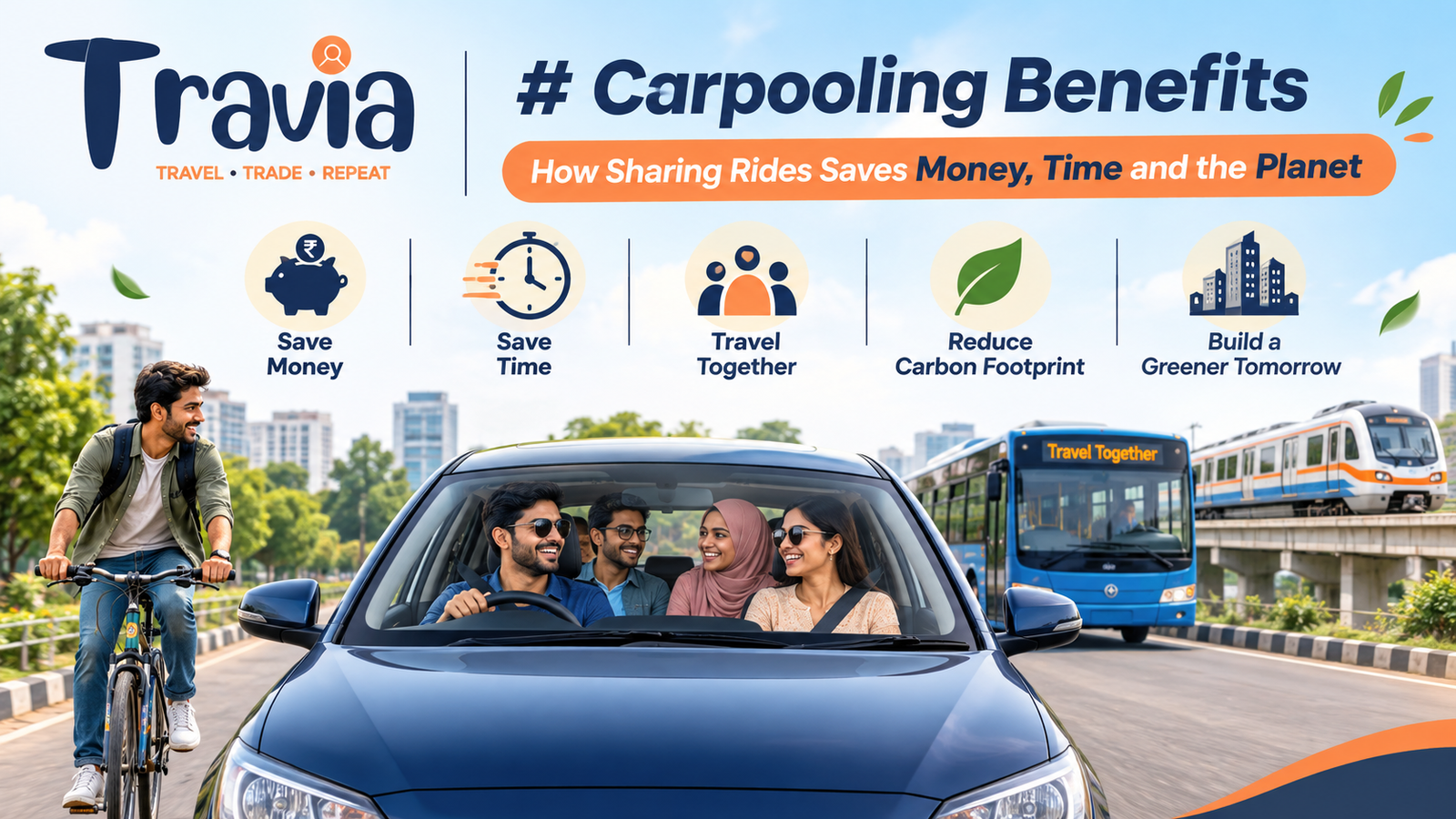
By the Travia Team | Updated: November 2026 | 8 min read
Most cars on the road during a commute carry one person. That means four or more empty seats are travelling the same route, burning the same fuel, paying the same parking fees and sitting in the same traffic. Carpooling fixes that simple inefficiency: people heading the same way share one vehicle and split the costs.
In this guide, we cover the main benefits of carpooling, who it works best for, and how to get started safely.
What Is Carpooling?
Carpooling means two or more people sharing a car for a trip they were already planning. The driver keeps their route and schedule, and passengers contribute towards fuel, tolls or parking. It works for daily commutes, regular routes such as university or office runs, and one-off intercity journeys.
The Main Benefits of Carpooling
1. Lower Travel Costs
Fuel, tolls and parking are shared, so each person pays a fraction of the full cost. Over a month of commuting, the savings can be significant for both drivers and passengers.
2. Less Stress Behind the Wheel
Passengers can relax, read or catch up on messages instead of driving. Drivers who share the rota with others drive fewer days a week.
3. Fewer Cars, Less Congestion
Every shared trip takes at least one car off the road. When enough people do it, the effect on rush-hour congestion and parking demand is noticeable.
4. Lower Emissions Per Person
The emissions from a trip are largely the same whether the car carries one person or four, so splitting them across more riders cuts each person's share.
5. Better Access to Parking
Fewer vehicles arriving at the same destination eases pressure on car parks, which matters at busy offices, campuses and city centres.
6. A More Connected Commute
Regular carpool groups often build a friendly routine, and colleagues, neighbours and classmates get to know each other.
Who Carpooling Works Best For
- Daily commuters with a fixed route and fixed hours
- Students and staff travelling to the same campus or workplace
- Intercity travellers going the same way on weekends or holidays
- Drivers with empty seats who want to offset fuel costs
How to Carpool Safely
Safety matters more than savings, so keep these habits in mind:
- Use a platform with clear profiles. Look at ratings, profile details and any verification a platform offers before agreeing to a ride.
- Share trip details with someone you trust, such as the route, vehicle and expected arrival time.
- Agree the plan in advance: pick-up point, timing, cost split and any ground rules like music or luggage.
- Check the basics as a passenger: the vehicle should match the booking and the driver should drive responsibly.
- As a driver, confirm your insurance covers carrying passengers, since policies differ.
- Trust your instincts. If something feels wrong, you are free to cancel or end the ride.
How to Get Started With Travia
[TRAVIA: describe the actual steps here — sign up, post or search a ride, confirm details. Add real features such as verification, in-app chat or payments only once confirmed.]
→ [TRAVIA LINK: Find or offer a carpool on Travia]
Frequently Asked Questions
How much can I save by carpooling? It depends on distance, fuel prices and how many people share. The more riders and the longer the regular route, the larger the saving per person.
Do I need to be a driver to use carpooling? No. Passengers can join rides offered by drivers going the same way.
Is carpooling safe? Carpooling can be safe when you use profiles and reviews, share trip details with someone you trust, and follow common-sense precautions.
Can I carpool for a one-off trip? Yes. Many people use carpooling for occasional intercity trips as well as daily commutes.
Conclusion
Carpooling turns empty seats into shared savings. You spend less, drive less, and take fewer cars off the road, while still getting where you need to be. If you're ready to share your next ride, start with [TRAVIA LINK].
Related: Bikepooling — What It Is and How to Start | Parcel Carpooling — Send Parcels With Travellers
Disclaimer: For informational purposes only. Rules on carrying passengers, cost-sharing and insurance vary by location. Check local regulations and your own insurance before offering or joining shared rides.