
Send a Parcel With Travellers — Parcel Carpooling Guide
Learn how sending a parcel with a traveller works, its cost and eco benefits, what you can and can't send, and how to do it safely with Travia.
Learn what bikepooling is, how it differs from carpooling, its benefits for short trips, and the safety rules to follow when sharing a bike ride.
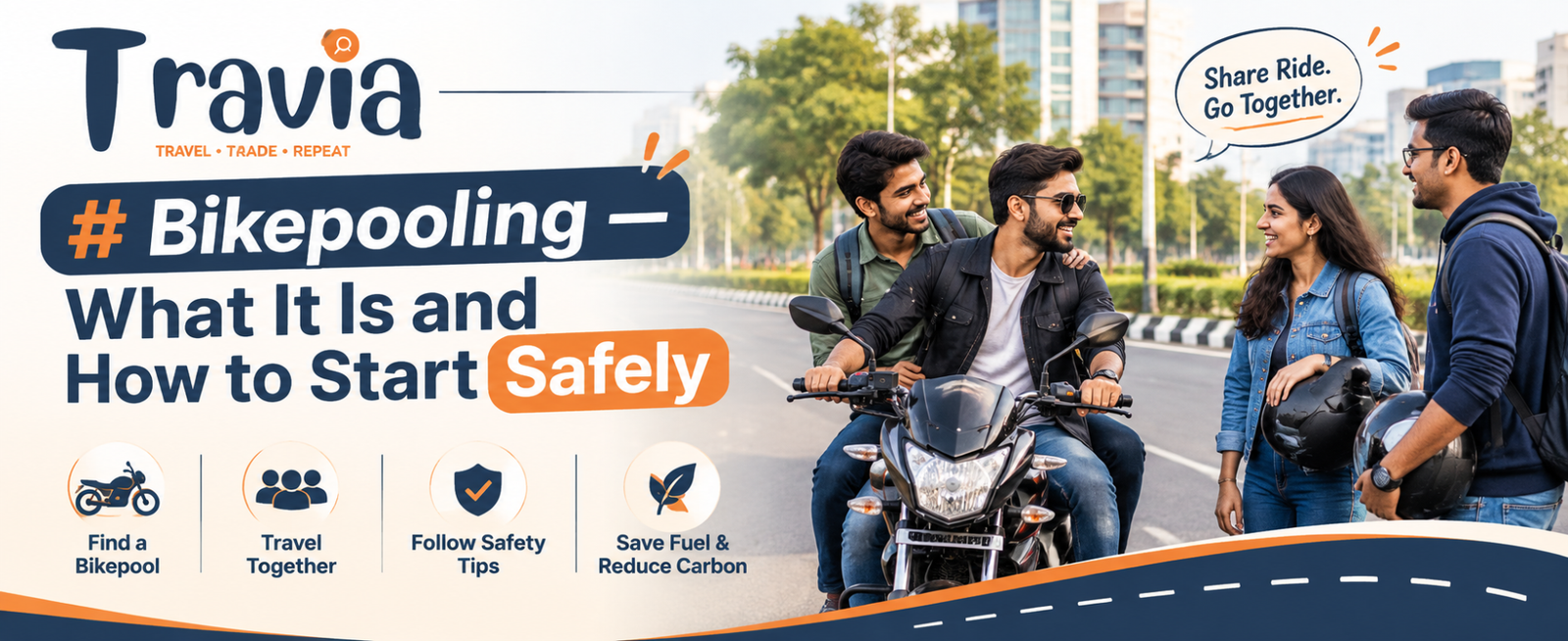
By the Travia Team | Updated: November 2026 | 8 min read
Carpooling gets most of the attention, but plenty of daily journeys are short, solo and done on two wheels. Bikepooling applies the same sharing idea to those trips: a rider with a spare seat takes a passenger heading the same way, and the two share the cost.
In this guide, we explain what bikepooling is, where it works best, and the safety rules that make it worthwhile.
Bikepooling means sharing a ride on a two-wheeler, typically a motorcycle or scooter, between a rider and a passenger travelling along a similar route. The rider keeps their usual journey, and the passenger contributes towards fuel or running costs.
[TRAVIA: confirm exactly how Travia defines bikepooling — motorcycles and scooters only, or other bikes too — and edit this section to match.]
A shared fuel cost on a small bike is a light expense, which suits everyday journeys of a few kilometres.
For many urban commutes, two wheels can beat four, which saves time for both rider and passenger.
A passenger who would otherwise take a car, taxi or a second bike removes a vehicle from the road.
The seat behind the rider is empty on most trips, and bikepooling puts it to use.
Because bike passengers are more exposed than car passengers, safety comes first:
Local laws on carrying passengers, helmets and cost-sharing vary, so check the rules in your area.
[TRAVIA: describe real steps — sign up, post or search a bike ride, confirm details. Add real verification or safety features only once confirmed.]
→ [TRAVIA LINK: Find or offer a bikepool on Travia]
Is bikepooling safe? It can be safe when both people wear helmets, the rider is licensed and experienced, and the bike is roadworthy. Riding a two-wheeler carries more exposure than driving a car, so taking precautions matters.
Do I need to own a bike to bikepool? No. Passengers can join riders who offer a seat.
Can I bikepool with luggage? Only light luggage that does not affect balance or safety. For bulkier items, consider a car ride or a parcel option.
Does bikepooling work for long trips? It is generally better suited to short and medium urban trips. For long journeys, a car is usually more comfortable.
Bikepooling is a practical way to share short journeys, saving money and time while keeping vehicles off the road. With helmets, the right insurance and a clear plan, it can be a good everyday option. To find or offer a bike ride, head to [TRAVIA LINK].
Related: Carpooling Benefits — How Sharing Rides Saves Money, Time and the Planet | Parcel Carpooling — Send Parcels With Travellers
Disclaimer: For informational purposes only. Riding a two-wheeler carries risk. Rules on passengers, helmets and cost-sharing vary by location. Check local regulations and your insurance before offering or joining a bike ride.